Football or pitched battle? In Ashbourne, the line is blurred (photos)
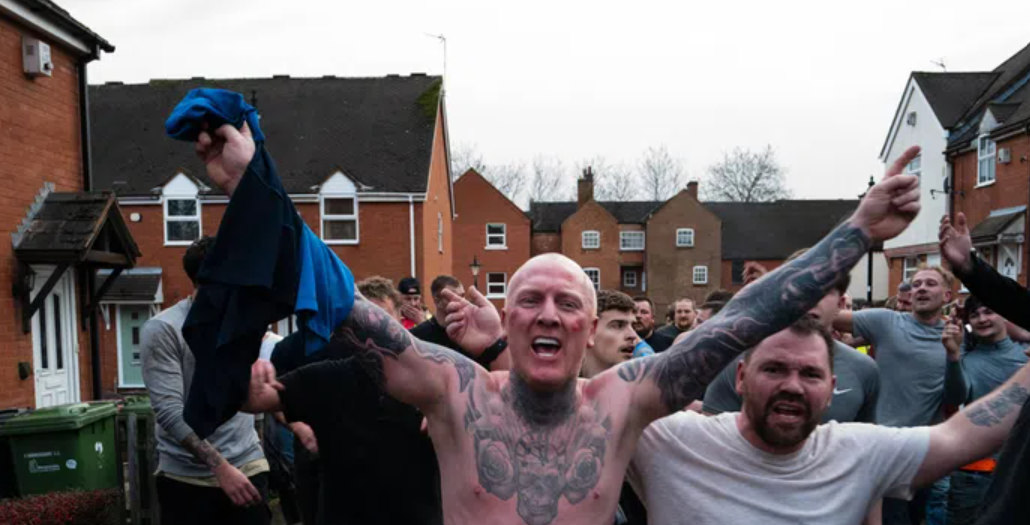
These days, the village of Ashbourne, in the heart of England, is enveloped in spectacular chaos for the locals, who honor a tradition that is over 800 years old: Shrovetide Tuesday and Ash Wednesday are the only days of the year when Shrovetide football matches are played, an event that attracts thousands of participants and global attention.
This form of medieval football is famous for its violence and takes place in the streets and fields of the city. Despite its chaotic nature, the event has been a landmark on the local calendar for centuries – there are records of this game since 1199, and therefore it is considered that the 827th edition of the event was played in 2026.
What are the rules?
Each day, the game takes place between 2 PM and 10 PM. As the event is not televised, those interested in watching it must travel to Ashbourne (and maintain a safe distance). The combative nature of the game leads Ashbourne shopkeepers to protect their stores and people to move their cars out of the city center to avoid damage.
The game begins in the Shawcroft car park, where a respected local figure throws the ball into the crowd. And in 2003, that figure was none other than the then-prince and current King of England, Charles III. From there, two teams, the Up’ards and the Down’ards , try to get the ball into their respective goal. Unlike modern football, the objective is to score in your own goal, which consists of a stone obelisk. The two goals are separated by a distance of 4.8 km. For a goal to be valid, the ball must be hit against the obelisk three consecutive times.
The inherent violence of the game leads to frequent brawls, with exchanges of blows and torn clothing. It’s common for several people to bleed, and there are far more kicks exchanged between players than actually thrown at the ball. In fact, this is a rarity, since the ball is usually carried, thrown, or, as happens more often, pushed by a crowd of dozens or hundreds of people.
The short rulebook also defines the prohibition of committing homicide, even through negligence, and unnecessary violence is frowned upon, although not prohibited. The game cannot take place in cemeteries, places of worship, or private property. It is also illegal to transport the ball in a motorized vehicle or hide it in a bag or coat. Finally, there is no limit to the number of players.
The special ball
The main object of the game is a ball that is larger and heavier than a normal football, weighing about 1.8 kg. It is made of leather and stuffed with cork shavings to ensure it floats on the river.
North versus South
In Shrovetide football, loyalty to a team is not a matter of family heritage or preference, as it is in modern football. Instead, affiliation is determined by the participant’s birthplace in relation to Henmore Brook, a tributary of the River Dove that runs through the town.
Participants born on the north bank of the creek are the Up’ards , while those born on the south bank make up the Down’ards team . This tradition defines one of the most unique rivalries in the sport.
Recent results
Although the Down’ards emerged victorious in the last encounter, the Up’ards have dominated the last decade . Balls from previous editions of the event can be seen on display in local pubs , although some get lost during the intensity of the game.
2015: Up’ards 1-0 Down’ards
2016: Up’ards 1-1 Down’ards
2017: Up’ards 1-0 Down’ards
2018: Up’ards 1-1 Down’ards
2019: Up’ards 0-1 Down’ards
2020: Up’ards 1-1 Down’ards
2021: Cancelled due to the Covid-19 pandemic.
2022: Up’ards 3-0 Down’ards
2023: Up’ards 1-0 Down’ards
2024: Up’ards 2-0 Down’ards
2025: Up’ards 0-1 Down’ards
Comments are closed.